

An Introduction to Music Theory
What’s going on with this site?
The goal of this site is to share various techniques and theories in music, from how to learn a riff, write a song, to how to record it. There will be articles and videos of some playthroughs and lessons. The focus will be with guitar but I will touch on various instruments and the theory will be universal, which is what’s so great about music theory. I’ll also share some great tools to get started on your musical voyage. So dig in and learn to make something you dig.
Why read this random person’s advice?
There’s nothing special about me, but I saw many parallels in various forms of art and life that apply to how one can write music and think about life. Sometimes reading the connections a person can make with the instrument can change how you work. I’m not talking about the passion one can have with the music (no matter what it should come within), but the ponderance on an aspect that connects to something, seemingly, irrelevant. Some connections may seem obscure then just a little tilt of your head and “it’ll click.” A big connection for me is the cubist era in visual art, the abstraction of the visual to its basic shapes gives you a thought process to consider when composing. There are chord and scale shapes to create the parallel to understand how to use shapes. This is a super dense aspect to think about, but it’s just a quick example. I’ll show you the pond that is this concept in a post soon. The connections will be sprinkled in posts, with proper explanation, it won’t be like reading the rambling of some sort of inebriated wise sage on a train of thought with no destination explicitly defined (no absolute promises, some connections I make just may not click for you, it’ll be alright to gloss over it. I usually like the connection to instill concepts, if you got the clear words, concepts and definitions, you’ll be good.)
Read on to see weird connections that may get you thinking of composing and playing instrument in a way that lets YOU come out. I will share what I’ve learned in my time playing and learning. I will never claim to know everything, anybody who does needs their ego fed, don’t fall in the trap. There will always be something to learn in music. Knowing theory can be boring, but using it is fun! This is like the idea that practicing the alphabet is boring but speaking is fun. All those books and all the music you know uses the building blocks to create what the composer/author is imagining.
Now lets make the composer making something that’s coming from their mind YOU!
Keep it bodacious!
Right here is what’s latest
Useful Tools
At the bottom of the homepage you may have seen a list of some “Useful Links” for various aspects of your learning voyage. We’ll be going over what they are and what they can be used for (Guitar Scales) http://www.all-guitar-chords.com/guitar_scales.php Just going to the link brings up a platform to look up all the scales you…
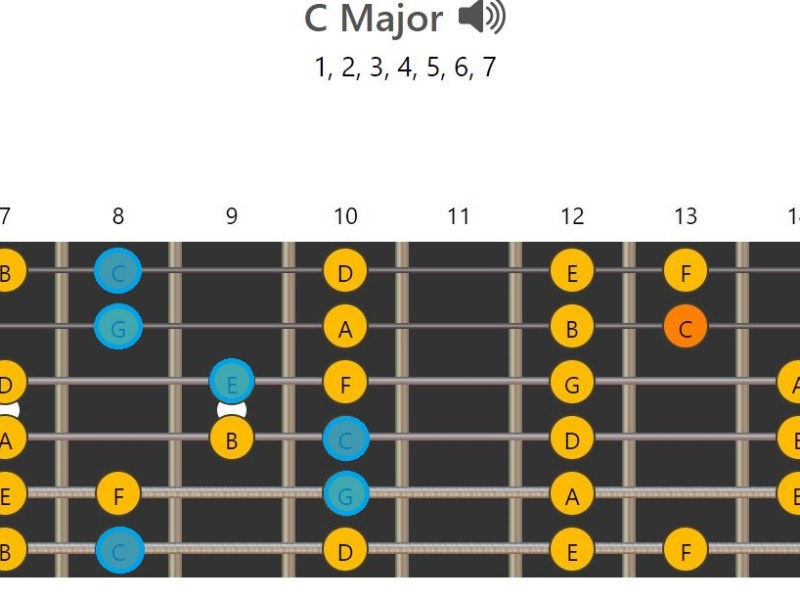
The (Brief) Connection Between Chords and Scales (For Guitar)
Preface: This will be a brief way to look at the connection between chords and scales on guitar. I have articles on Scales and Chords, going in depth in how they work and how they are read in charts. If these images seem confusing, you should read the pages before reading on to familiarize yourself…
Recording Direct-In
We got an intro to recording in a post, and this time we’ll go a little more in depth to recording with one of the methods discussed. To me, direct-in means to have an instrument connected directly to an interface, without a microphone. You can still put in pedals into your chain to color your…
Fundamentals of Photography
In photography, you consider variables in the “Exposure Triangle” to make sure your shots are not too dark and not too bright, but at a good balance. Exposure is the balance of light and dark in a photo. The brightest and darkest spots, together, make up the dynamic range of the shot, some cameras have…
Chords and Scales With Linear View (AKA Scales and Chords for Piano)
So the title of the post may seem wordy and a little scary, but the visual connection a musician can make with the notes is to see the pattern of the lowest note to the highest. After A is A# then B and so on… on guitar there’s the idea that you can hit the…
Reading Chord Charts (Guitar)
Up top is how most books (remember those?) or other places/sites express their chords. There are a couple symbols, shapes, numbers and grids, with some letters at the bottom, what does that stuff mean? Before we begin… You may ask: “What’s a Chord?” Well it’s 2 or more notes played simultaneously on the same instrument.…
Reading Scale Charts (Guitar)
Seeing a scale chart at first might look like staring at a map of minesweeper, but, really, it’s not as scary. This, unlike minesweeper, can make sense! Guitar Scales Site Just looking at this gives you a wealth of information, with the understanding of a scale, you can understand the harmony of chords based on…
Intro to Recording Audio
There are several approaches to recording for different purposes, and today we’ll go over a couple. Before You Reach The Record Button Something to consider would be your space/environment. You don’t need to set up a space of soundproof where you can hear your own heartbeat, you just don’t want something (or someone) being louder…
Reading Tablature (Tabs)
How to read Tablature and get started playing guitar!
Why Learn Theory?
Summary: The relationship between drawing and composing.
Check out some concerts I filmed and edited
Follow My Blog
Get Bodacious content delivered directly to your inbox.
Useful Links
- (Guitar Scales) http://www.all-guitar-chords.com/guitar_scales.php
- (Piano Chords) https://www.pianochord.org
- (Good Program for Tablatures) https://www.guitar-pro.com/en/index.php
- (Freeware Version of a tab program) http://www.power-tab.net/



 Bodacious Music